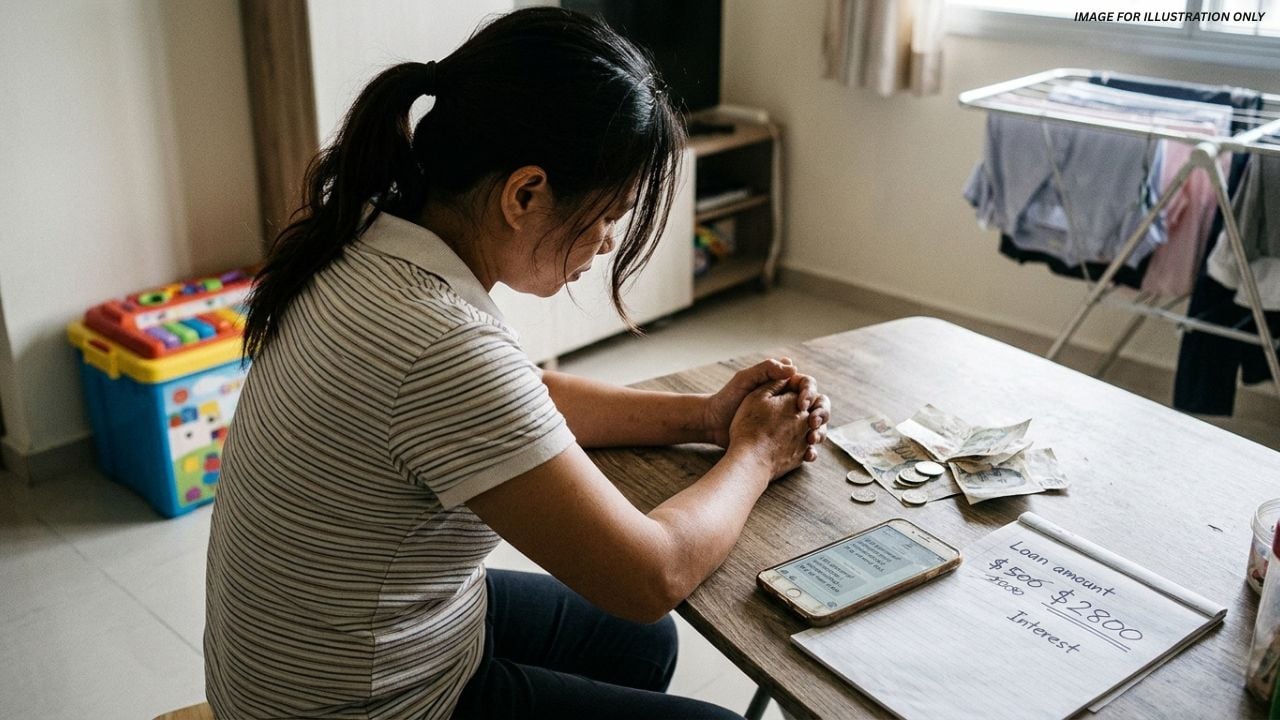
Singapore – A SGD180 loan grew into a S$1,040 demand within weeks. The threatening calls didn’t go to the helper who borrowed it. They went to her employer. The case is one of several showing how Filipino domestic workers in Singapore are falling into debt through instalment shops, informal lenders, and loan sharks.
According to a news report, the employer was flooded with calls and WhatsApp messages on National Day, days after her Filipina helper flew home. The callers had photos of the worker’s permit, which showed the employer’s IC number and home address. The employer paid the full amount to stop the harassment. The helper later blocked her number, and MOM revoked the worker’s permit.
How “Hulugan” Turns Into Quick Cash
Since July 2019, foreign workers earning below S$10,000 a year can borrow only up to SGD500 from licensed moneylenders, down from S$1,500. Many now turn to hulugan, or instalment plans, instead.
The cycle usually works like this:
- A worker buys gold or a phone on instalment with little or no downpayment.
- She pawns or sells the item right away.
- She sends the cash home, but the shop debt remains.
At Lucky Plaza alone, more than 20 shops advertise hulugan, alongside pawnshops and remittance centers. In one contract, a 2.96g gold necklace cost S$1,320 over five months, with a S$90 charge for every late payment. When pawned, it fetched just S$430.
When One Emergency Becomes Several Debts
One worker missed a payment on a SGD280 online loan. The lender then charged her an SGD80 “deferment fee” every five days, and none of it reduced her balance. Another worker handed over her passport as collateral to a fellow helper. A SGD1,350 loan grew into a demand of more than SGD2,000.
Pastor Billy Lee of Blessed Grace Social Services (BGSS) says he meets about 10 Filipino workers a month who have borrowed from loan sharks. Those seeking his group’s help usually owe two to four jewelry shops on top of that. Lenders find borrowers at weekend hangouts and on social media. When payments stop, they pressure workers by contacting their employers.
MOM’s Warning
The Ministry of Manpower says domestic workers who borrow from unlicensed moneylenders will have their work passes revoked and be barred from working in Singapore.
Lee hopes workers will feel safe raising money problems early. He also wants employers to see groups like BGSS as a first call, not a last resort.
Help Is Within Reach
The charity Aidha runs financial courses, including a free one on debt that teaches workers how to spot loan sharks. CEO Jacqueline Loh shared the case of a worker who only answered a Facebook loan ad. Lenders sent her money she never asked for, then demanded interest on it.
Kabayan, if debt is weighing on you, speak up early. Your employer, BGSS, or Aidha can help before the interest piles up.