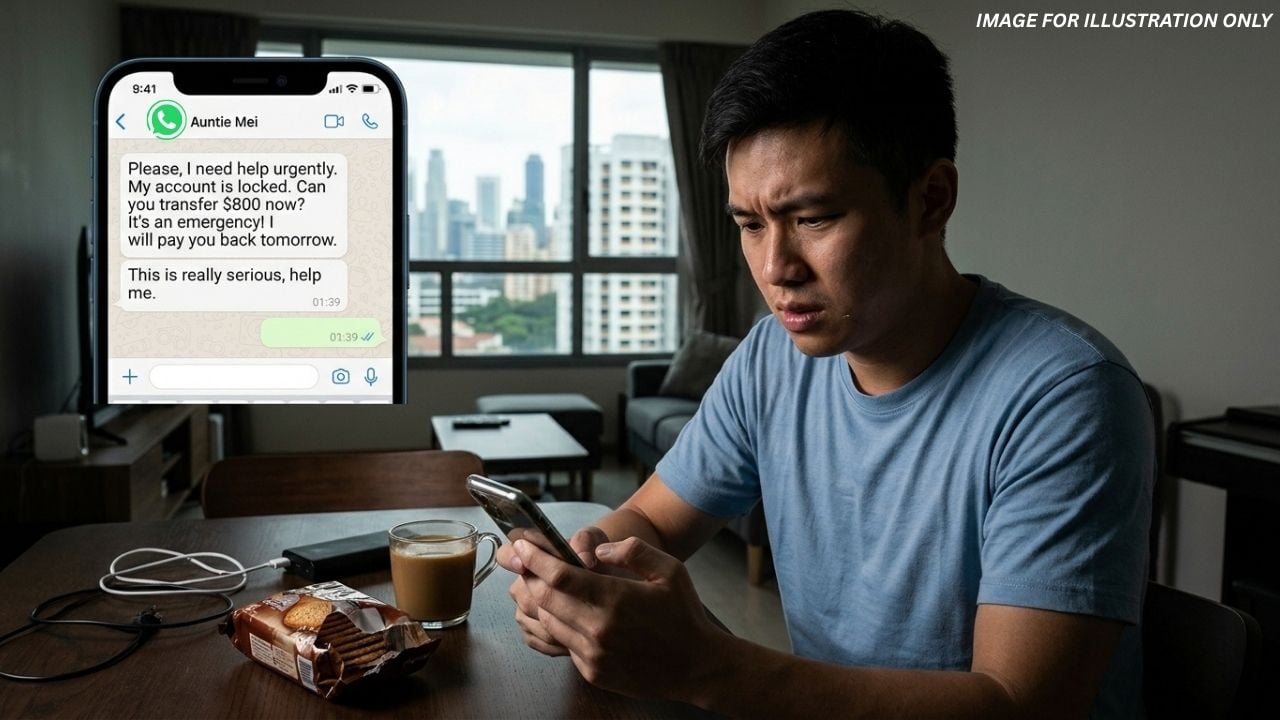
Singapore – Scammers in Singapore are taking over WhatsApp accounts and using them to message the account owner’s contacts, posing as trusted friends, relatives, and co-workers to ask for money. At least 128 people have been tricked since September 2026, with combined losses of no less than S$249,000.
According to a news report, the Singapore Police Force issued an advisory on Wednesday, October 21, 2026, warning the public about this latest form of social media impersonation scam.
A Familiar Name, a Fake Request
The scam works because the message comes from a name you already know and trust. Once a WhatsApp account is compromised, scammers reach out to the people on that contact list and ask for a loan or urgent financial help.
The excuses often sound ordinary:
- The sender says they can’t make a bank transfer at the moment
- They claim they’ve hit their daily transfer limit
- They ask you to make a payment on their behalf
In some cases, scammers pose as children and ask their parents to send money for an artificial intelligence (AI) course or an exchange program.
Why This Matters to Our Community
For many Filipinos working in Singapore, WhatsApp keeps us close to the people we care about, from co-workers and fellow kababayan here to loved ones back home. That trust is exactly what these scammers exploit. A quick “Pa-help naman” from someone you know can feel natural to answer without a second thought.
How to Protect Yourself
The police shared practical steps everyone can take:
- Verify first. If someone asks for money in an unusual way, contact that person directly through a call or another channel before sending anything.
- Turn on two-step verification. This adds an extra layer of security to your WhatsApp account.
- Check your linked devices. Remove any unknown or unnecessary devices connected to your account.
- Use ScamShield. The ScamShield app blocks scam calls and filters suspicious SMS messages. You can also call the 24/7 ScamShield Helpline at 1799 to check if something looks like a scam.
If You’ve Been Scammed
Act fast. Contact your bank right away to report and block any fraudulent transactions, then file a police report. More information on scams is available at www.scamshield.gov.sg.
A short pause before you send money can save you from a big loss. Take a moment, make that call, and share this warning with your family and friends so they stay protected too.